Wednesday, October 15, 2014

富士山


Three weeks ago I climbed the tallest mountain in Japan (and active volcano), Mt. Fuji. Myself and several other JETs made the journey from Ishikawa to Tokyo on Friday night in order to spend our three day weekend conquering the mountain and enjoying the Big City. Since we rode an overnight bus we arrived in Tokyo bright and early on Saturday morning which gave us a couple hours to have fun before boarding another bus which would us right up to Fujisan.

"Good morning, Shinjuku!"
After stowing our bags in coin lockers at the station, we deliberated where we could go at 6:30 in the morning. We hoisted our hiking packs over our shoulders and headed to a nearby McDonalds. This was my first time to eat McDonald's in Japan and it was actually quite tasty. Not likely to become a frequent stop for me since the nearest one to my town is over an hour away, however at 6:00 am while waiting around its not a bad choice after all. After partaking in double decker breakfast sandwiches we helped ourselves to their bathroom space to change clothes and wash up like the homeless kids we were that day. Once fed and refreshed we set out for a few hours of Tokyo enjoyment.

First we went to Meiji Jingu, the grand shrine in Tokyo named after the Meiji Dynasty. We prayed, examined the lucky charms and amulets, and each of us bought omikuji to read our fortunes. We also walked through the garden and splashed ourselves in the natural spring well nestled at the bottom of a foresty slope.

The grand gate leading into the grounds of Meiji Jingu


Afterwards we walked out of the shrine and stepped across the street to Harajuku to do some shopping! After spending a couple hours going in and out of shops there we headed back to Shinjuku station to be on standby for our bus out to Fuji.

We ate lunch at a fast gyudon joint, then headed by a conbini to stock up on water and protein filled snacks for the trek. Then we excitedly rushed back to our pick up point to board the bus at three. Following an hour and a half long sleepy ride we were let off at the fifth station of Mt. Fuji, the starting point of our hike. We changed into our hiking gear, ate in the restaurant, soaked up warmth and took our last free bathroom trips. At 7:40 p.m. we turned on our headlamps and headed to the dark trail head to start.


We climbed the whole night. It took seven hours for me and the other fastest JETs to reach the peak of the mountain. After the first couple of hours of hiking I started to get tired, by the middle of the hike my little group would climb a switchback and then have to rest for a minute every time. As we climbed higher and the temperature dropped the chatting gradually subsided and we just forged on as a weary group of hikers. By the time we reached the peak the temperature dropped until it reached -2 degrees C with a windchill at -11. While we climbed our bodies stayed warm from the hard work but every time we stopped for a break after just a short minute the cold penetrated our layers and froze the sweat on our bodies so that even though we were tired we had to stand up and keep moving.

Throughout the climb I gradually added more layers to my hiking outfit to stay warm- my
Under Armour shirt and leggings, an extra warm heat tech shirt, Nike shorts, a t-shirt, sweatpants, and on top of all a rain breaking jacket and pair of tennis pants.

I and one other JET reached the summit the fastest, at 2:30 a.m. with the three others in our fast pack quickly coming up behind. Only problem then was that we were determined to watch the sunrise, along with hundreds of other hikers, so we had to wait at the top of the windy, cold, dark mountain. Crowds of people huddled together, scrounging for any material they could use to cover themselves. I even saw people with their hats pulled over their faces and feet sticking into their backpacks. But no matter what you attempted to cover yourself with we were all freezing. Everyone on top of the mountain curled up tightly and shut our eyes and shivered as we attempted to sleep. I think I actually did sleep for about an hour somehow.


Before I knew it I woke up at four and it was time for us to stir and find a spot at the ridge on the peak to watch the sun rise. At 4:45 a.m. the skyline began to turn red, and by 5:20 the sun was climbing into the sky. Even though it was cold and windy I was determined to sit on that ridge and watch the entire sunrise. I climbed that dang mountain and waited in the cold for three hours for that sunrise and I was not going to miss it- cause I am not doing it again!

It was beautiful. At an elevation of 3,776 meters (12,389 feet) we were so high above the clouds that the view was spectacular. Sitting on Fuji the panorama was nothing but clouds and the tops of the smaller mountain's dark peaks peeping through the cloud banks. Also, shout out to fellow JET, Sean Grannum, for generously providing some of the pictures for this post!

The sky beginning to turn colors, everyone started to stir and find places to view the famous sunrise from.


Perched way above the clouds
A Tori, (a special gate for sacred places)

Mt. Fuji's crater
Hundreds of hikers gathered on Fuji's peak, enjoying the incredible view
Having reached the top, battled with potential hypothermia, and seen the sunrise it was time for me to get back down that mountain! The descent took only 3 hours and my little group reached fifth station- our starting point from the previous night. We had a couple hours to wait for our bus back to Shinjuku so we shopped for omiage and sat in a circle in the stone courtyard waiting. On the bus back to Tokyo every passenger on the bus fell asleep within five minutes. Halfway through the ride I woke up to complete silence, looked around and saw that literally every passenger was out and quickly ducked back down in my seat to follow suit. Tired, sweaty and dirty we made it back into Tokyo around 2 p.m. My three travel mates and I headed to our ryokan at 3, where we determined our order for the shower by Rock, Paper, Scissors (the quintessential decision making method in Japan), then napped for a couple hours before heading out for a night in Tokyo.

The main gate leading to Fuji's sacred peak

Incredible sights even as we were descending the mountain!

Made some random friends while waiting for our buses.

Yeah, I climbed that one this morning

Monday, September 8, 2014

ゴミの日

Little did I know, after coming to Japan the biggest cultural hurdle I would face is learning how to properly sort trash. 

Japan is extremely conscious about their trash; unfailingly disposing of it (as opposed to littering), sorting it, and recycling what is possible. Growing up in America, I was used to throwing almost all of my trash into one bin and leaving it at that without a worry. Although my parents were always recycling-conscious and taught us to separate aluminum cans, newspapers, and milk cartons for recycle even that did not prepare me for the strict trash standards in Japan. 

Every year, each home, business, or school receives a trash calendar and guide to throwing stuff away which must be followed to the letter. Each type of trash is collected on a different assigned day of the month, the categories include: burnable, non-burnable, cans, PET bottles (clear plastic bottles like you would get a soda in), glass bottles, etc.  The trash guide is a detailed pamphlet complete with pictures to detail with numerous examples exactly what items can be thrown out together and how to package them. Some things go in pink bags, some in green, and some in clear. Then of course some items must be stacked and tied with twine. But even with such detailed guides, it is sometimes difficult to determine how certain items should be dealt with. In fact, several times I have witnessed even Japanese people completely clueless as to how to proceed when faced with a questionable or not clearly defined item. In my kitchen I have four separate bins in constant operation to keep my trash separated correctly, and even with that sometimes I make a mistake.


There it is, the yellow tag of shame. If you should fail to sort or prepare your trash for collection properly the trash men leave it there and fasten a yellow tag to it detailing your error. You must reopen your trash bag and correct the mistake before the trash men will accept the bag (on the following collection day for that type of trash). 

Burnable trash is easy, it's the most common trash and is collected twice per week. I have never had mine nor heard of somebody else having burnable trash rejected by the trash men. Incidentally, there is a rumour that some people, when faced with an item they have no idea with which trash to dispose of it, hide said item in the burnable trash. ("If I can set it on fire, they can set it on fire!")

My problem comes with bottles. The first time I had trash rejected it was because I failed to remove the caps from the PET bottles. So my landlord explained to me what the tag meant, and I had to open a closed bag and remove each cap and toss it into burnable trash. Then there was the glass bottles. Now with these I removed the caps and even washed off the labels before bagging them and taking them to the collection bin. That seems thorough enough, right? Nope. My glass bottles were rejected because I failed to separate the clear glass from the dark glass bottles. 

After these incidents I thought I had learned my lesson about sorting trash. I was careful to strip everything down well and rinse things out before bagging it. But yet again my PET bottles were rejected this month. What on earth did I do wrong this time??? My landlord informed me that I needed to remove the caps. 

"But I did this time..." I protested in confusion. He picked up the bag and peered around it to inspect the contents. Ah, there in the bottom, just two bottles were still fastened shut by their caps. I clearly forgot to remove the caps when I threw them away. Apparently the trash men pick up each bag and carefully inspect the contents before deciding whether to throw it into the back of their dump truck or leave it to the exasperation of the owner. 

Lessons Learned?

Although I never expected to put so much careful thought into the manner in which I dispose of my trash, I am grateful of what Japanese trash culture has taught me. 

Japan is very clean. Why? Because people rarely, rarely ever litter here. The streets, parks, and roads are beautiful almost everywhere. I have always been impressed with how Japanese people, adults and children alike, are very conscious of collecting their trash and being sure to dispose of it. Everyone is sure to separate it properly, and always be responsible for cleaning up after themselves or even the entire group they are with. Even if there is no trash can in sight, someone will undoubtedly collect everything and stow it in their purse to throw away later. I am glad that I too have picked up this habit, if I am out with a group of people and we create some trash I automatically collect it without a thought and if need be will carry it until the next trash can is spotted. It doesn't even seem like a burden or chore, its just expected.  In Japan it is a norm that you are responsible for your trash. Which is exactly the way it should be.

By having to put so much thought into disposing of trash correctly, I am very aware of the trash that I produce. Also, the type of trash that might be produced even affects my consumer decisions. For example, I understand that aerosol bottles must be pierced with a sharp tool before being thrown away. Since this is the case, I always think to myself I need to only buy hairspray in regular bottles. 

That being said, I have yet to attempt aerosol can disposal. Instead my (accidentally purchased) empty hairspray bottles are currently being collected until a later date when I have the nerve to risk explosion while I punch a hole in an aerosol can... 

Festival Hopping - Pt. III


七尾イッサキ祭り - June 2nd

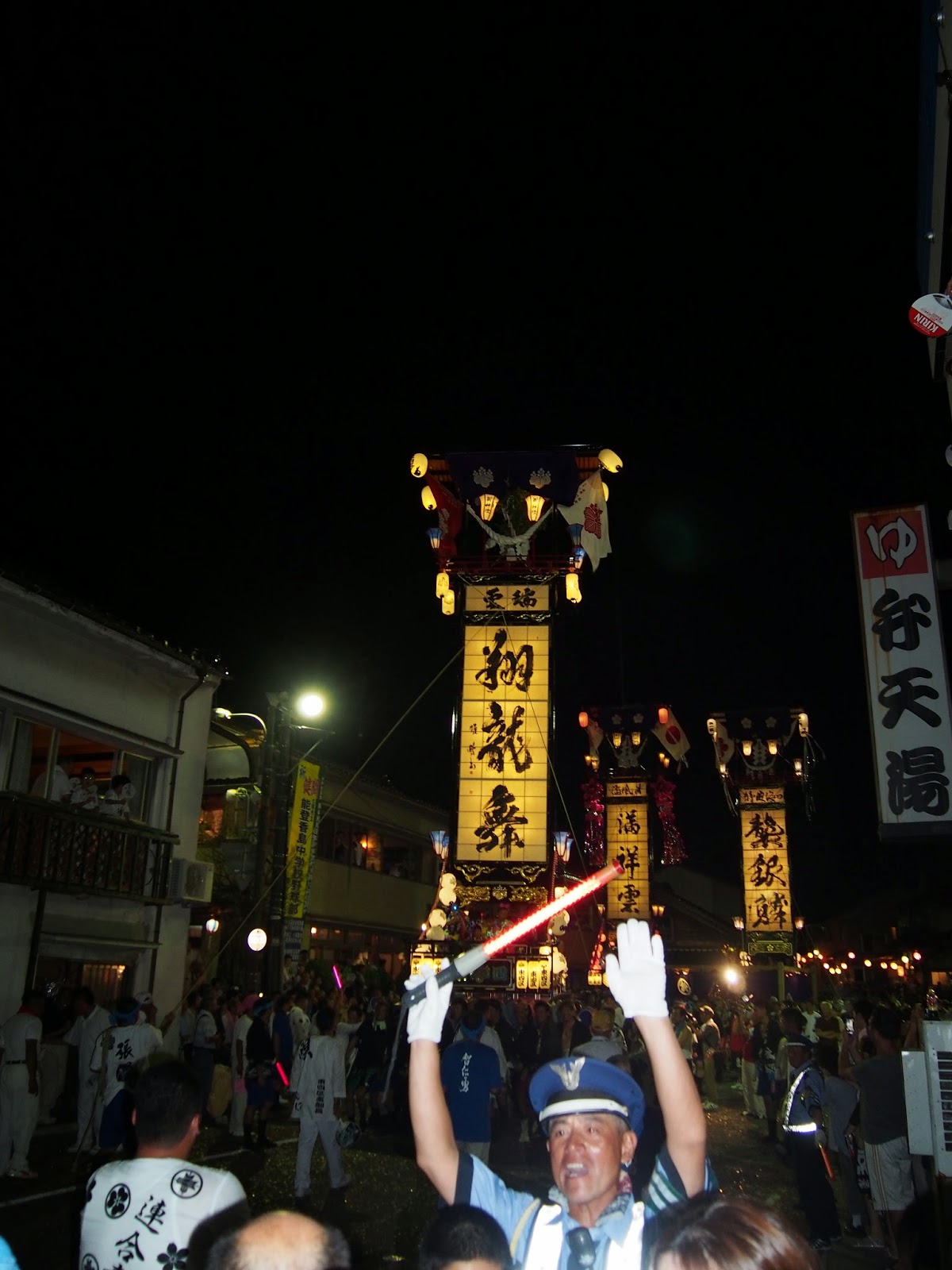
Last weekend I went to a town an hour away to see their Kiriko festival. Their's is well known for being awesome because the teams are so powerful and well organized. The kiriko they carry are bigger than ours so their teams are a little bigger but they perform in such impressive synchronization so it's fun even to just watch it. However, at Isaki only men are allowed to be on the teams or to even touch the kiriko at all. Even the children riding the kiriko supposedly can only be boys, so they always dress in yukata and wear wigs and wear bright fake jewelry and even makeup. However, on one of the kiriko's we noticed there were two girls! This is very unusual so we were perplexed to see it. Now I love festivals, and I really love participating in them- carrying the kiriko, chanting, and so on. So while I am totally against the no-girls-allowed-rule, I still appreciate the power and teamwork of the macho kiriko teams. 
The kiriko lined up and ready to go at 8 p.m.!


The team straining under the weight of their huge kiriko
As the kiriko approached the crowds the police yelled at the audience to stay back to avoid the swaying kiriko


宇出津ボンおどり - August 3rd

My town had a little Bon Odori celebration where people dressed in yukata and danced around a stage. First all the children from the nursery school did a dance with their mothers, then a couple different women's groups also danced. They even had a little fireworks display to cap off the evening!


珠洲ほうりょう七夕祭り - August 7th

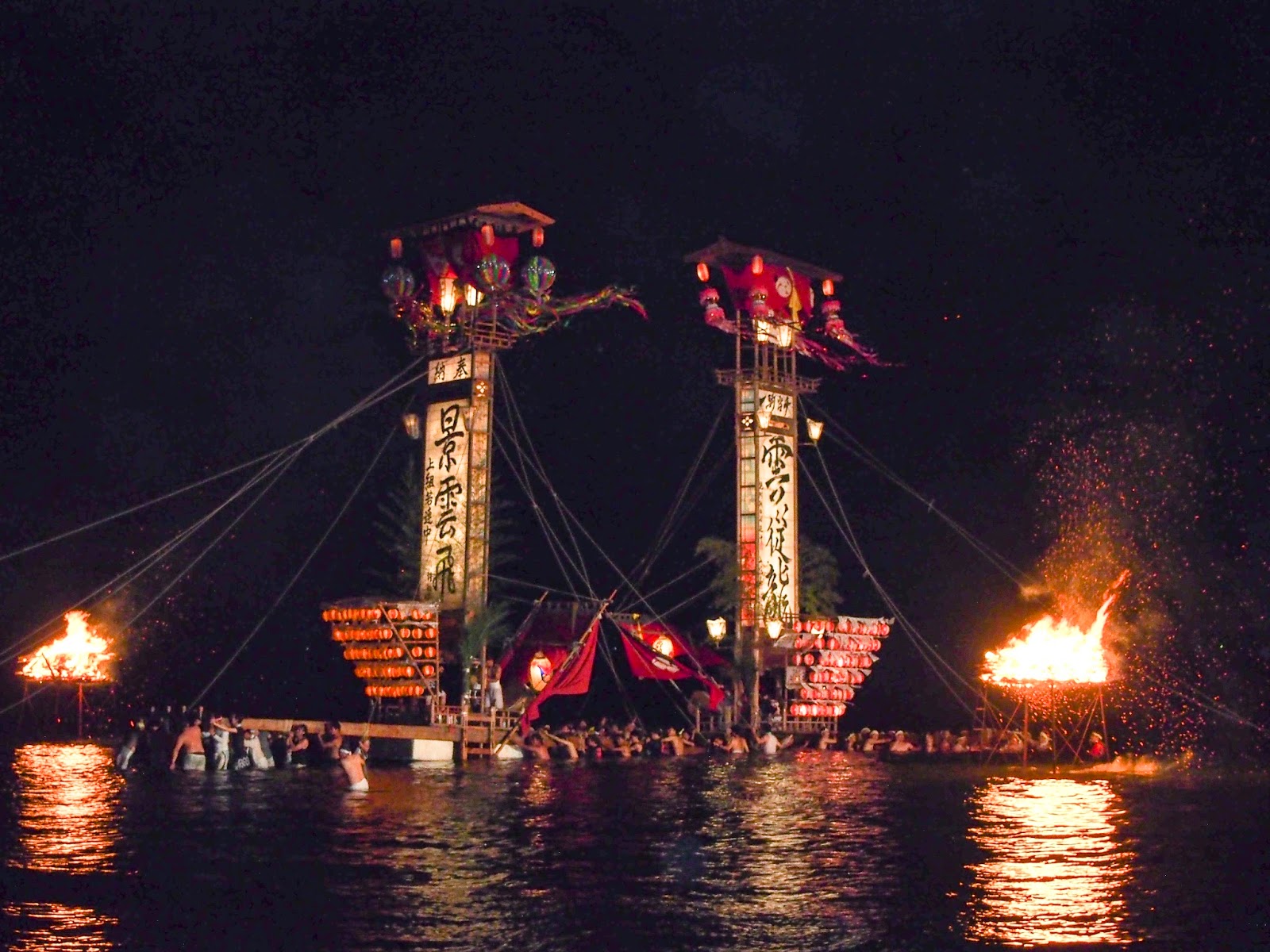
Last Thursday I invited a couple of my co-workers to go to Suzu, the next town up north, to see their famous Tanabata kiriko festival. This festival really was awesome and I am so glad we went to see it! It is famous because the men on the kiriko teams carry the tall kirikos waist deep into the sea and line up between huge torches, and then fireworks are shot behind them! In fact, many of the fireworks are shot off sideways so that they burst literally right behind the line of kirikos. It was incredibly beautiful.


Wednesday, August 13, 2014

Festival Hopping - Pt. II

Wajima Citizen's Festival - June 7th

Wajima is another town on the other side of the peninsula from mine, and I went to see their annual "Citizen's Festival." The highlight of the festival is their firework show which is known as the biggest in the Noto, and it was indeed the best fireworks I have seen in my life. Japanese firework shows last much longer, have bigger fireworks, and even create gorgeous shapes. Here are a few examples that in no way do it justice. 


アジサイ祭り - June 28th

Ajisai Matsuri was a small festival held at one of the "flower temples" of Noto. It is famous because of the Ajisai flower bushes that grow all around the temple, and they have a festival every year while they are in full bloom. My taiko (drum) team actually performed during this festival. For the full story see: http://oliviahogan.blogspot.jp/2014/07/this-past-saturday-evening-my-taiko.html.


あばれ祭り - July 4th

Abare Matsuri- the festival of violence. This one is pretty unforgettable. (Well, they all are.  But this one, really, blows your mind to see.) http://oliviahogan.blogspot.jp/2014/07/let-fire-and-violence-begin.html


3 for 3 - July 19th-21st

July 21st is Marine Day- a national holiday in Japan. What better way to celebrate a three day weekend than by going to three different festivals right?

Actually there were so many festivals that weekend- five that I know of! But I went to three that I was personally invited to. 

On Saturday night I attended the Mawaki Kiriko festival, which had the prettiest kiriko I have seen so far. The Kiriko were colorfully decorated with paper streamers, flowers and lamps. Also the lantern part of each of the 8 kirikos had an ink image of a traditional Japanese lady. I asked why they all had a picture of a lady on them, and upon posing that query to the priest he explained to me that it is a long-standing tradition to have a drawing of a beautiful lady because that way the men heaving the kiriko up and down the streets will work harder! In fact, upon being spotted by one of the older patrons of the festival, I was handed a lamp and instructed to dance and cheer in front of one of the kirikos to encourage the boys carrying it. Then they decided to dress me in a hapi coat and have me join one of the kiriko teams, so I helped heave the heavy wooden kiriko until 2 am when they finished for the night.


On Sunday I drove up to the neighboring town of Suzu for Iida's Yama Matsuri. Yama are basically like wagons that the townspeople pull with huge ropes from the front, while a team of experienced men push from the back and operate the "brakes." They use a huge wooden pole which they slide under the wheels when it needs to stop or pivot to make a turn. This job is only trusted to the strongest and most confident men since a moment of in-attention could result in injury. The yama for this festival were much different than the yama I have seen before in other town's festivals. Iida's yama were square shaped and looked more like portable shrines than a wagon (like the other yamas I have seen). They were mostly decorated in red and gold and had hundreds of lamps swinging from the ridges on all sides. Of course there were scads of children riding the whole time as well.


Monday night I finished my three-day weekend with one last kiriko festival in Yanagida. I was invited by one of the teachers I work with and upon entering her family's house I was greeted by at least ten of my elementary kids from Yanagida. I took a seat at a table with all of their mothers, who were quite shy at first but when they realized I speak Japanese they became warm and chatty and I had a great evening chatting and laughing with my student's mothers.

Thursday, August 7, 2014

Festival Hopping - Pt. I

Summer in the deep Noto is a blast since we there is a festival somewhere every single weekend. I love the energetic atmosphere of country festivals so I go to as many as I can. In fact, everyone keeps asking me if I have travel plans for the Summer, and I just say "Nope. The beaches are gorgeous and there are festivals every weekend- so there is no need to travel away from the Noto in Summer!" 

I have written a few times about the main festivals that my town has had (and there are a couple more to come!) but I also want to share some of the festivals in other towns and villages that I have been able to experience this summer. 

小木イカす会 - June 1st

One of the villages that I work in is famous for their fantastic squid fishing industry. In fact, Ogi sends squid to fine seafood vendors around Japan including Tokyo and even overseas to China and South Korea. Every year at the beginning of squid season the town has a squid festival to celebrate the town's livelihood as well as petition for a a great fishing season. 

My friend and I arrived around 9 a.m. and sampled various squid items to munch on while waiting to see if we got selected to ride on the commercial squid fishing boat. Everyone wants to ride it, but there is only so much time and space. Only two forty minute boat rides accomodating about 30 passengers are given during the festival. So people get tickets and then are selected through a lottery system. Luckily enough, we had the right ticket! 

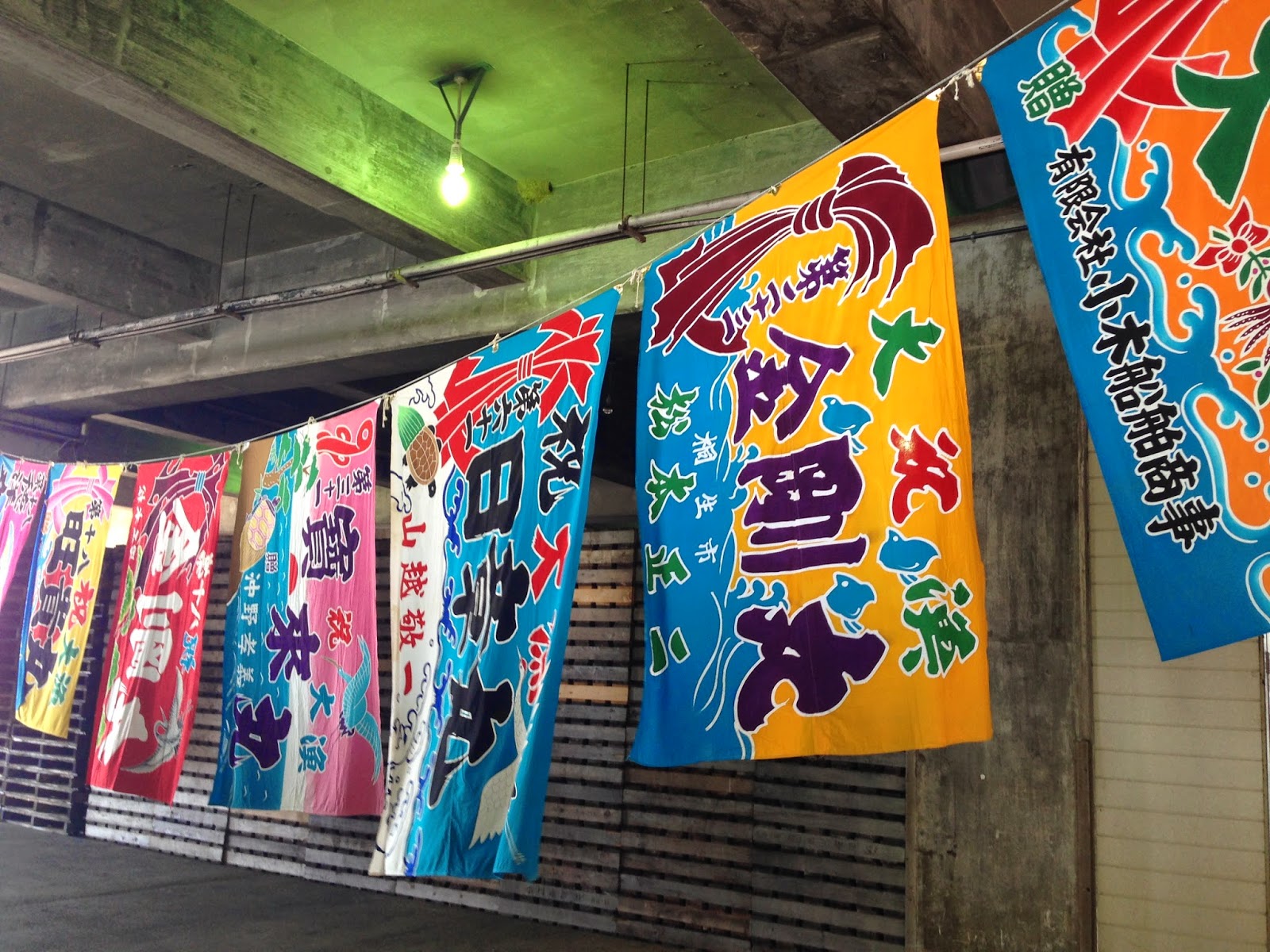
The boats were all decked out with young bamboo stalks and special flags, 大漁旗. These banners are hoisted to call for a rich haul of fish during the trips.
The water is so clean and clear- you can see all the way to the bottom. Also, right around the port there were so many jellyfish floating in the water, pictured here is one of the long tailed poisonous ones.
More 大漁旗, the banners were hung up around the wharf to make it bright and festive for the festival.
The kids got to fish for squid
Rows of tables and grills were set up so people could buy fresh seafood then chat while they enjoyed their lunch on the grills.
Munchies! Squid stuffed with mochi rice and grilled, and freshly sliced squid sashimi- the product of the boys fishing in the tank!
Riding the boat was so much fun. I have never been on a ship that big. It was a full ship, with living quarters, kitchen, toilets, shower and everything because the crew regularly goes on trips that go from 2-6 months in duration. It was lovely being out on the water with the cool breeze and sun. The Ocean is so beautiful here. Its completely clean and blue! We could look down and see all the jellyfish floating around us too!

They have a tradition to send off boats by tying hundreds of strands of paper tape and holding on as long as possible as the boat pulls away from the wharf. It is quite pretty actually to watch the boats take off with a rainbow trail blowing in the wind...
View of the wharf as we pulled away

Several of my students also happened to be riding the boat at the same time!

Wednesday, August 6, 2014

South Korea vs. Japan


During the trip I decided South Korea is kinda like a rough, dirty version of Japan (but it does have its upsides!). There are so many similarities in the two cultures and yet so many striking differences. 

Upon reaching Korea, the first day I observed several differences from Japan that remained consistent throughout the trip. First, I noticed that the Koreans did not stare at us. In Japan, as foreigners, we are constantly stared at while walking in stores, riding the trains, etc. But the Koreans generally did not seem to notice us that much. After speculation we decided it must be due to Japan's intensely isolated position- it is an island country with an extremely homogeneous population. Often the Japanese do not venture outside of their country or have a very good understanding of the outside world. Of course there are many that do, but the majority may not. 

Second, the people really are beautiful! However, South Korea is the plastic surgery capital of the world. We spent lots of time wondering if the pretty people we saw were natural or if they had plastic surgery. Moreover, the men are big and tall! Koreans are actually the same size as us! Yeah there are short people, but generally I felt like I was shorter than most men I saw. It was awesome to not be a giant among elves for a few days. As we learned in detail during our trip South Korea is in a state of war, and the men must spend 21 months in compulsory military service. So they are all athletic and big because of their military training. Furthermore, I imagine that for the Koreans, being in war, it is common for parents to stress their kids eating lots so they will "grow big and strong," since they know military service and defense of their country is inevitably in their future. Whereas in Japan, the country is very safe and stable and hardly a military allowed so maybe there is less "need" to grow up big and strong? 

Next, South Korea is much dirtier than Japan. Especially bathrooms. There was trash on the streets, broken toilets, and just general grossness specifically in the party areas of town. Of course living in Japan for almost a year we are accustomed to a rather immaculate environment so stepping outside of the country makes you want to reach for knee high waders no matter where you are going. 

The next apparent difference was fashion. South Korean fashion is way more relaxed than Japanese. The South Koreans were still trendy and cute all the time but in a much more casual way, which to us felt more like a style we are familiar with as westerners. Korean fashion seemed to prioritize comfort a bit higher than Japanese fashion seems to. I saw people wearing tennis shoes constantly, even with their cute outfits. Usually in Japan tennis shoes are only worn with athletic clothes; which would only be worn if you are doing athletics, and certainly not out in public, unless of course you are at some type of athletic event- and in that case you should be wearing head to toe matching, name-brand sports wear. In Japan, girls seem to constantly be wearing heels especially if you are to compare Seoul with Tokyo (both capital cities). But most South Korean girls were wearing flats. Also the South Koreans wore lots of jeans, just like we do. In Japan jeans are not worn very often, skirts and other cloth pants are much more prevalent. 

Also, the South Koreans are noticeably more brusque than Japanese. Again, we were probably affronted by this only because we live in the land of politeness. It's not that the Koreans were unfriendly, but waitstaff for example were very laconic and brusque with us. And the bus drivers were atrocious- they did not care who was in front of them, they would keep driving and almost run over people or almost scratch cars. The driving in general was frightful- everyone on the roads was just terrible. Cars would even honk at pedestrians to move faster. Even when the walk signs were on, cars would be right on top of the crosswalk lines waiting to speed through as soon as the lights changed.

Every place has its highlights and shadows of course, and overall I enjoyed Korea a lot. However given the choice to live in Japan or South Korea I would definitely choose Japan with no hesitation. Even so, South Korea was lots of fun and I loved my trip there and I certainly intend to go back!